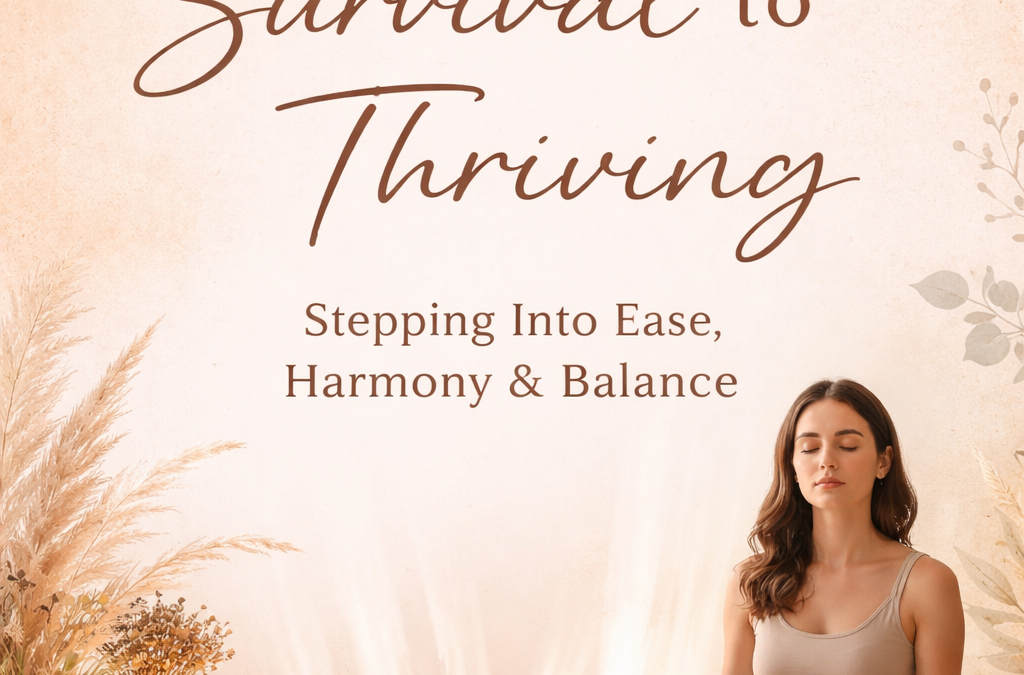
For many of us, survival mode has become so familiar that we don’t even realize we’re living there. It shows up as constant busyness, tight shoulders, shallow breathing, difficulty resting, or the feeling that we always have to be “on.” Survival mode isn’t a failure—it’s a wise, protective response of the body and nervous system. And yet, it’s not meant to be a permanent way of living.
At some point, the body begins to whisper (and sometimes shout) that it’s time for something different. Time for ease. Time for safety. Time for thriving.
Stepping out of survival mode doesn’t happen overnight. It’s not a switch you flip—it’s a soft unfolding. A remembering. And the most powerful place to begin is with the central nervous system.
Understanding Survival Mode
When we are in survival mode, the nervous system is often stuck in fight, flight, or freeze. Even when life appears calm on the outside, the body may still be bracing for what’s next. This can look like:
-
Difficulty relaxing or slowing down
-
Feeling overwhelmed or easily overstimulated
-
Trouble sleeping or digesting
-
Emotional reactivity or numbness
-
A sense of disconnection from the body
The beautiful truth is this: the nervous system can be gently retrained to feel safe again.
Creating Safety in the Body
Peace and harmony begin when the body receives the message that it is safe. Before mindset shifts or big life changes, the nervous system needs regulation.
Simple ways to invite safety:
-
Slow, intentional breathing—especially longer exhales
-
Gentle, rhythmic movement
-
Warmth (blankets, baths, tea, sunlight)
-
Predictable routines and moments of stillness
Safety is not something we force—it’s something we allow.
Mindfulness: Coming Home to the Present Moment
Mindfulness is not about emptying the mind or “doing it perfectly.” It’s about noticing. When we practice mindfulness, we gently guide the nervous system out of past stress and future worry and into the present moment—where safety often already exists.
Try this:
Pause for a moment. Feel your feet on the ground. Notice your breath without changing it. Name three things you can see, two things you can feel, and one thing you can hear.
This simple practice can help signal to your nervous system: I am here. I am safe.
Movement as Medicine
Movement is one of the most effective ways to shift out of survival mode because it allows stored tension and stress to move through the body—rather than staying stuck.
Not all movement is created equal when the goal is regulation. Fast, intense exercise can sometimes keep the body in a stress response. Gentle, mindful movement helps the nervous system soften.
Supportive forms of movement include:
-
Slow flow or restorative yoga
-
Yin yoga and long-held stretches
-
Walking with awareness
-
Somatic movement and shaking
-
Breath-led, intuitive movement
When movement is approached with curiosity rather than control, it becomes a conversation with the body instead of a demand.
Thriving Is a State of Being
Thriving doesn’t mean doing more. It means feeling more—more present, more connected, more alive. It’s found in moments of joy, rest, creativity, and self-trust.
As the nervous system begins to relax, you may notice:
-
Deeper breaths and better sleep
-
Clearer intuition and decision-making
-
A softer relationship with yourself
-
More energy and emotional resilience
Thriving grows naturally when the body feels supported.
A Gentle Reminder
If you’ve been living in survival mode, there is nothing wrong with you. Your body has been doing its best to protect you. The path forward isn’t about fixing—it’s about listening, slowing down, and allowing ease to return.
Peace, harmony, and thriving are not destinations. They are states you can begin to experience right now, one breath, one mindful moment, one gentle movement at a time.
You are allowed to rest.
You are allowed to soften.
You are allowed to thrive.
Let this be the season where you stop bracing and start becoming. Where your body remembers safety, your breath remembers depth, and your life begins to move in rhythm with ease instead of effort.
You were never meant to survive forever. You were meant to live—fully, gently, and in harmony with yourself.